
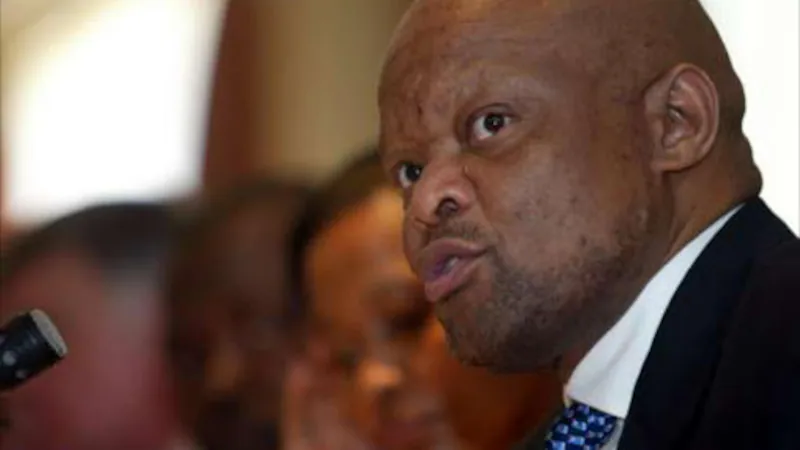
The recusal application brought by the National Prosecuting Authority (NPA) and the Department of Justice (DOJ) against Advocate Ishmael Semenya has been dismissed by the Khampepe Commission.
Semenya serves as the chief evidence leader in the judicial commission investigating allegations of interference in the prosecution of Truth and Reconciliation Commission (TRC) cases.
The applicants argued that Semenya was conflicted due to his involvement in advising on the NPA’s 2005 TRC prosecution policy, which was later declared unconstitutional for creating “backdoor amnesties.”
However, in her ruling, chairperson Justice Sisi Khampepe held that the NPA and DOJ “failed to discharge the requisite burden of proof by applying the incorrect legal test and by failing to establish the necessary factual evidence.”
She emphasised that evidence leaders are not decision-makers and therefore cannot be held to the same standard as judges, rendering the Sarfu test — which the applicants relied on — inapplicable.
“They therefore cannot be equated to judges or those who are vested with decision-making powers, as was the position in the Sarfu case,” Khampepe stated.
Instead, the commission applied the approach from Porritt and Killian, which requires demonstrating that the evidence leader’s past conduct would result in “substantive unfairness.” Khampepe found no basis for such a claim.
Addressing concerns over Semenya’s role in the Nkadimeng and Others v NDPP matter, Khampepe ruled that his prior involvement did not constitute an inherent conflict. She also noted that all actions of evidence leaders — including questioning witnesses — remain under the direction of the commission chairperson, serving as a safeguard for fairness.
On the allegation that Semenya had accessed confidential or privileged NPA information during the 2005 litigation, Khampepe said the applicants failed to provide any evidence to support the claim.
“The applicants have failed to establish that any confidential or privileged information was provided to Semenya SC,” she said.
The commission also addressed complaints about alleged procedural irregularities, including claims that Semenya improperly allowed counsel for the Calata group to lead certain witnesses. The Calata group represents families of apartheid victims whose cases were referred to the TRC but never prosecuted.
Khampepe ruled that no substantive unfairness resulted from the issue, adding that it had already been settled in an earlier decision.
Consequently, she dismissed the applications brought by the NPA and DOJ and lifted earlier restrictions placed on Semenya’s participation in deliberations and questioning related to amendments to the prosecution policy.
