
JOHANNESBURG — South Africa’s fragile unity government was shaken on Wednesday after the Democratic Alliance (DA), the country’s second-largest party, voted against the national budget.
The DA, which joined the government after the African National Congress (ANC) lost its parliamentary majority last year, opposed the budget due to a proposed tax increase, arguing it would further burden the country’s poor majority. The party said it plans to challenge the budget’s adoption in court.
The Economic Freedom Fighters (EFF), a leftist opposition party, welcomed the discord. EFF leader Julius Malema said, “We are happy that we managed to break this so-called GNU (government of national unity). What is uniting you if you can’t agree on a national budget?”
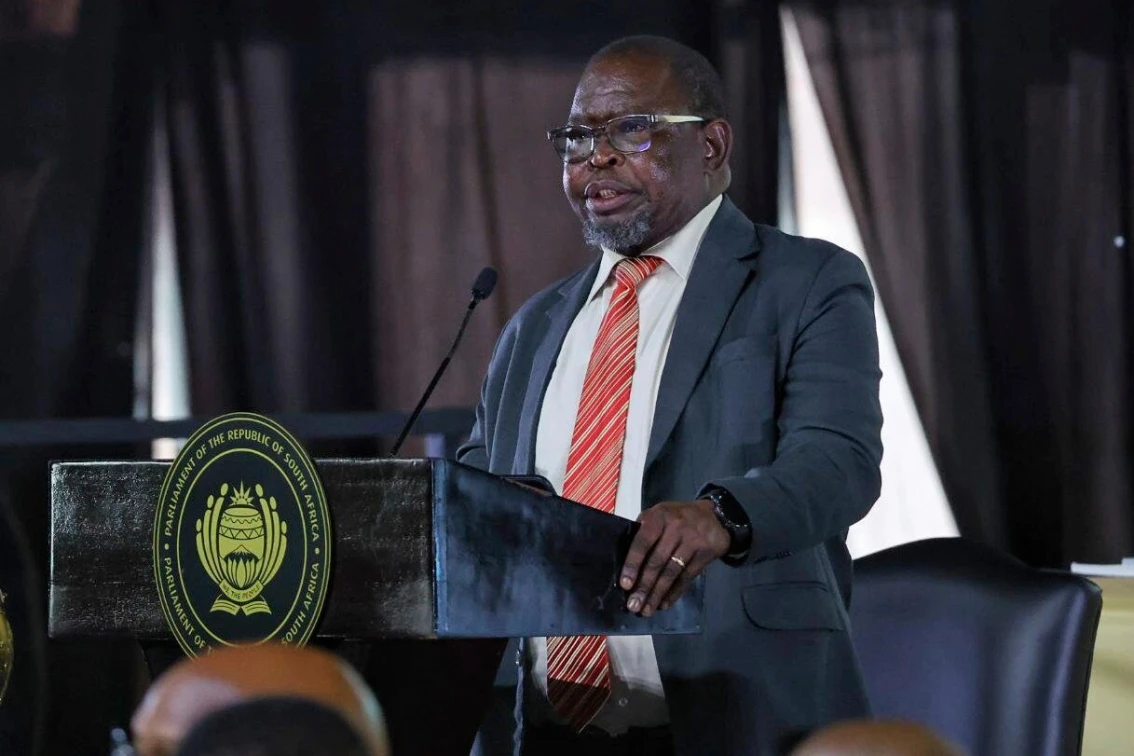
Finance Minister Enoch Godongwana questioned the DA’s ability to remain in the government, saying, “I don’t think you can vote against a budget, and tomorrow you want to grow and be part of its implementation. It can’t be.”
The contested budget proposes raising the Value Added Tax (VAT) by half a percentage point starting next month, with another half percentage point planned for next year. VAT applies to goods and services, including food and electricity. Opposition parties and civil society have criticized the plan as anti-poor, noting that more than 20 million South Africans rely on welfare grants and the unemployment rate exceeds 32%.
The tax increase is intended to generate over 15 billion rand (approximately $800 million) annually to fund health, education, and social services programs. The budget was revised to address anticipated cuts in foreign aid by the new U.S. administration.
The disagreement reflects ongoing ideological differences between the ANC and DA on issues such as foreign policy, land reform, and reforms in education and healthcare. On Wednesday, a small party outside the unity government, ActionSA, unexpectedly supported the ANC, allowing the budget to pass.
This marks the latest tension in South Africa’s unity government, formed after the ANC’s worst electoral performance in 30 years.
