

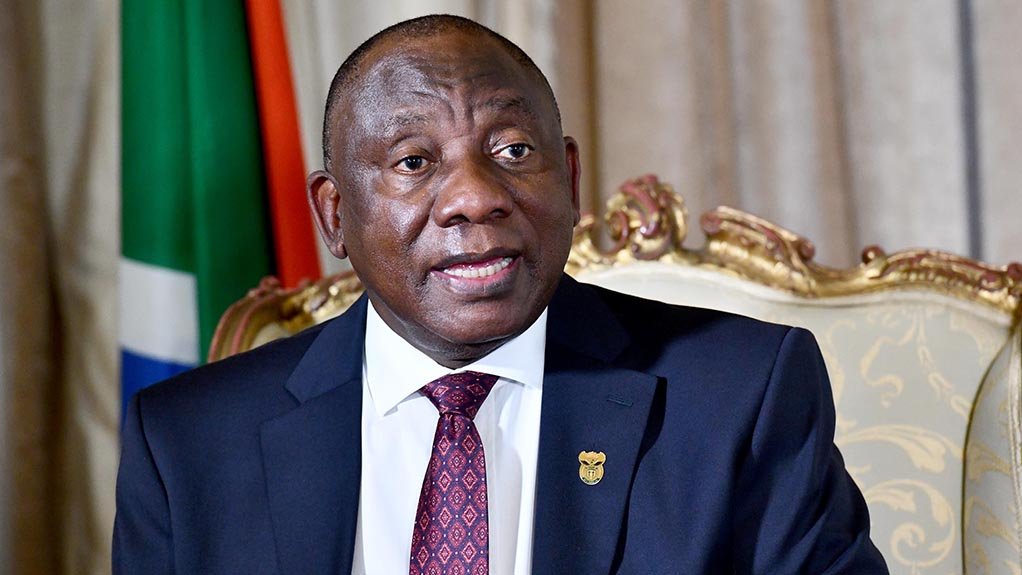
President Cyril Ramaphosa has shifted his stance on municipal governance, saying the Democratic Alliance (DA) should learn from the ANC-run Senqu Local Municipality in the Eastern Cape.
Ramaphosa came under fire last month after he told ANC members that the party’s councillors should learn from the DA, a comment that sparked outrage within his party and calls for his resignation.
Since then, the president has sought to reframe his remarks, saying that while the City of Cape Town under the DA has achieved strong audit outcomes, it has failed to deliver transformation and equitable service provision.
Speaking in parliament on Tuesday, Ramaphosa said he had witnessed “horror scenes” in the townships of Cape Town, where attention given to black communities was “less than desirable.”
“And I have compared Johannesburg and Cape Town. Johannesburg, in the past 10 years or so, has really made a great effort to upscale Soweto, where I grew up, which was really horrible. But now Soweto, in the main, has been largely upgraded because of the attention that the City of Johannesburg paid to it,” he said.
Ramaphosa noted that many cities across South Africa are struggling with rapid population growth, which increases pressure on service delivery such as refuse removal, water supply, and electricity distribution.
“As more and more people come in, the pressure on service delivery is heavy. So, people just form informal settlements and there is weak enforcement of bylaws,” he added.
However, Cape Town mayor Geordin Hill-Lewis dismissed the president’s latest comments as an attempt to perform damage control.
“He is merely trying to do damage control after he dared to speak the truth when he said that Cape Town and other towns governed by the DA are examples to be emulated,” Hill-Lewis told TimesLIVE.
“In fact, they are the only examples of progress and good governance in South Africa. Where his party governs, there is only decay, corruption and collapsed services. That is the sea of ruin and failure that he presides over,” he said.
Hill-Lewis added that despite challenges of poverty and unemployment, “Cape Town is steadily moving forward while every other city in the country is moving backward.”
Ramaphosa emphasised the need to address governance and service delivery challenges as they arise.
The ANC has struggled to regain its electoral strength since losing key metros in the 2016 local government elections. In Soweto — once one of its strongest bases — the party failed to win enough votes to reclaim Johannesburg in the 2021 elections. Current Johannesburg mayor Dada Morero has also been criticised for poor service delivery.
“It should never be that more attention is given to the more affluent areas at the expense of the places where lesser-income people live, and this is exactly what we are seeing here in Cape Town,” Ramaphosa said.
He referred to budget analyses suggesting that Cape Town’s per capita performance was worse than that of other cities, despite its strong financial statements.
“I say it as president, not to dismiss the efforts that are being made. I say it so that all our cities, all our municipal entities, must focus on the corrective measures that we need to take,” he said.
Ramaphosa added that the intention was not to criticise Cape Town alone, but to encourage improvement across all municipalities.
“So it is not, for instance, to take Cape Town and dump it in the dustbin. Let us all try to pick up the areas where there has not been much development.”
According to ANC insiders quoted by the Sunday Times, Ramaphosa’s initial comments praising the DA will likely continue to haunt the ruling party ahead of the 2029 local government elections, with fears that the DA will use his remarks in its campaigns.
In an apparent effort to calm tensions within the ANC, Ramaphosa said that the DA should also look to learn from the ANC’s successful municipalities in the Eastern Cape.
“So even Cape Town must go and learn there, even Johannesburg must go and learn there. How are they doing it? Why are they achieving such great results, and why are they enforcing or enhancing development in their little towns?” he said.
“We all have to learn from each other, and it is through learning from each other that we become better. And that’s precisely the point I was also making at that event.”
