
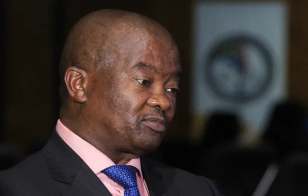
United Democratic Movement (UDM) leader, General Bantu Holomisa, has raised alarm over alleged large-scale corruption and mismanagement at the Public Investment Corporation (PIC), calling on President Cyril Ramaphosa and PIC chairperson Songezo Zibi to intervene urgently.
In a letter dated October 29, Holomisa warned that the R3.5 trillion managed by the PIC on behalf of public servants’ pensions is “at enormous risk” due to persistent corruption, political interference, and administrative failure — a crisis he likened to a repeat of the State Capture scandal.
He referenced the Mpati Commission, established in 2018 to investigate impropriety at the PIC, saying its findings on the unlisted investments portfolio, the Isibaya Fund, exposed deep governance failures. Despite the commission’s recommendations, he said, “the rot continues unchecked.”
Holomisa described an entrenched culture of “continued looting, mismanagement, and administrative bungling from top to bottom” within the PIC, adding that the situation can no longer be deferred to another inquiry.
Among the examples he cited was the Lanseria Airport Holdings investment. According to him, around 2013, Harith General Partners, a group of BEE partners, and the Government Employees Pension Fund (GEPF) invested in the airport. He claimed the PIC granted a R350 million loan to the BEE partner, Acapulco Trade and Invest, which was to be repaid from dividends but has ballooned to over R600 million with no repayment made.
Holomisa alleged that the PIC and its partner revalued the asset to R1 billion, allowing the PIC to take over the partner’s shares and still conclude it owed the partner R400 million. “A failed investment was transformed on paper into a profit for the debtor,” he said, calling the transaction “a R400 million windfall created out of thin air.”
He also questioned a proposed R7.9 billion acquisition of airline FlySafair, warning that the price was nearly double its fair value and could lead to “massive value destruction.”
Further highlighting internal instability, Holomisa cited the October suspension of Chief Investment Officer Kabelo Rikhotso, which he said stemmed from “power struggles” and political interference. He also mentioned a July 2025 bribery scandal involving former Unlisted Investments head Thabiso Moshikara, accused of soliciting a R3 million bribe.
The UDM leader pointed to the case of Daybreak Foods — a once-promising empowerment investment now in business rescue — which received another R150 million injection from the PIC despite repeated losses. He said this reflected a “lack of oversight and consequence management.”
Holomisa criticised the PIC board as “unfit for purpose,” saying it lacked investment professionals and accused the Finance Minister of appointing an unqualified member, Mr Maseko. He also alleged that major South African banks were complicit, advising the PIC on risky deals while protecting their own interests.
“Some of the top South African banks have been involved in advising the PIC to participate in transactions that expose the corporation to reckless investment dealings, while benefiting from the more secured portions,” he wrote.
Holomisa called for immediate interventions, including:
SCOPA hearings involving PIC and GEPF executives;
Forensic audits of the Isibaya Fund by the Auditor-General and the Special Investigating Unit;
A review of the PIC board’s composition and independence;
Public quarterly disclosures of all Isibaya Fund investments;
Performance-linked pay for dealmakers; and
A moratorium on Isibaya Fund activities, with its developmental role possibly transferred to the Development Bank of Southern Africa or the Industrial Development Corporation.
“The loss ratios of over 39% are purely criminal. No credible institution allows such brazen looting in the name of empowerment,” Holomisa stated, warning that the PIC risks becoming “a vehicle for political patronage.”
He cautioned that unless urgent reforms are made, the PIC’s mismanagement could endanger the pensions of millions of South African workers.
