
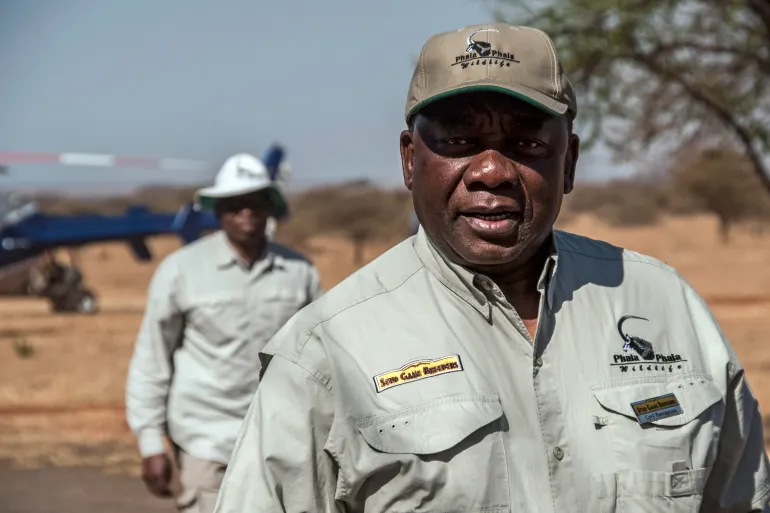
South Africa’s corruption watchdog on Friday cleared President Cyril Ramaphosa of any wrongdoing in connection with a farm cash scandal that had become one of the most significant controversies of his presidency.
The scandal broke in June 2022 when former South African intelligence chief Arthur Fraser lodged a police complaint, alleging that Ramaphosa had hidden the 2020 theft of about $4 million from his Phala Phala game farm in Limpopo Province.
After an extensive probe, Acting Public Protector Kholeka Gcaleka announced that Ramaphosa had not violated the executive ethics code or the constitution.
“Aggregated against the standard imposed by the executive ethics code, it is found that there is no basis upon which to conclude that the president contravened the relevant clauses of the law, including the period following the alleged theft of US dollars,” Gcaleka told reporters during a press briefing in Pretoria.
The Public Protector’s Office, an independent body established under South Africa’s constitution, investigates allegations of government misconduct but does not have the authority to prosecute.
Meanwhile, the police are still conducting a criminal investigation into the farm burglary, which raised suspicions of money laundering and corruption against the 70-year-old president.
Ramaphosa confirmed that $580,000 in cash was stolen, insisting it was payment for buffaloes bought by a Sudanese businessman. He has consistently denied any wrongdoing, maintaining that he has always sought to uphold the constitution and his oath of office.
Gcaleka clarified that determining the total amount of money involved was outside the scope of her investigation and therefore no figure was provided.
According to earlier reports, the theft was allegedly carried out by a group of six individuals — four Namibians and two South Africans — who entered the farmhouse by cutting through the perimeter fence and climbing in through a window.
Last year, a parliamentary panel concluded that Ramaphosa “may have committed serious violations and misconduct,” but the National Assembly later decided against initiating impeachment proceedings.
Ramaphosa, who rose from trade union leader to business magnate before assuming the presidency in February 2018, entered office with a promise of a “new dawn” following the corruption-plagued era of his predecessor, Jacob Zuma.
