

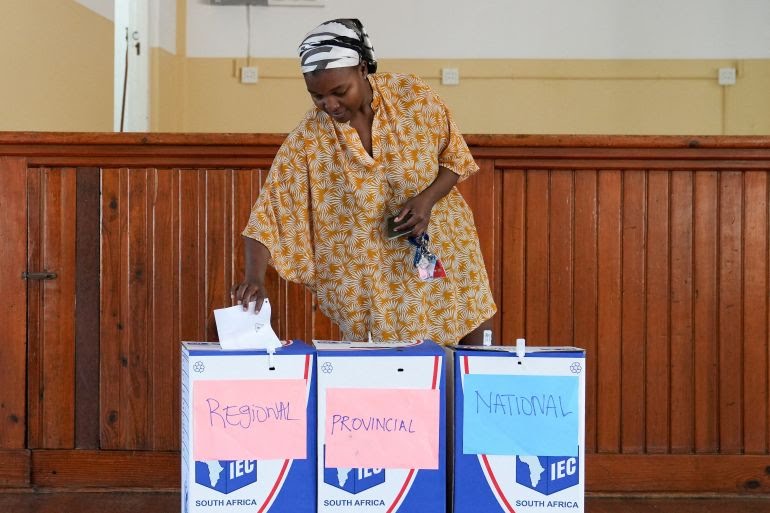
The African National Congress (ANC) has lost its parliamentary majority for the first time since the end of apartheid, marking a historic shift in South Africa’s political landscape.
With over 99 percent of votes counted, the ANC received nearly 40 percent in the May 29 election, well below the majority it had maintained since the all-race vote of 1994 that brought Nelson Mandela to power.
The main opposition, the Democratic Alliance (DA), garnered 21.63 percent, while uMkhonto we Sizwe (MK), a new party led by former president Jacob Zuma, captured 14.71 percent, siphoning votes away from the ANC.
Opposition leaders hailed the results as a significant breakthrough for a nation grappling with deep poverty and inequality. DA leader John Steenhuisen said, “The way to rescue South Africa is to break the ANC’s majority and we have done that.”
The ANC remains the largest party but will need coalition partners to form a government. ANC chair and Minister of Mines and Energy, Gwede Mantashe, said the party is open to discussions with any potential partner but did not specify details.
President Cyril Ramaphosa could retain his position, as the ANC still holds about twice as many votes as the next party. However, he faces a weakened mandate and potential pressure from opposition and internal critics.
The Independent Electoral Commission is expected to announce the final results on Sunday. Parties’ vote shares will determine seats in the National Assembly, which elects the nation’s president.
Analysts note that any coalition deal could involve opposition parties receiving cabinet positions or greater influence in parliament, including the role of speaker, to secure ANC leadership of the government.
