

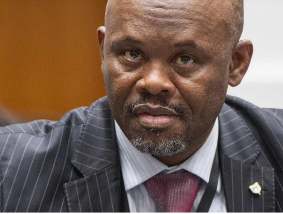
Suspended Deputy National Commissioner for Crime Detection, Shadrack Sibiya, has denied any links to the alleged “Big Five” cartel, describing the claims as unfounded and questioning why no arrests have been made if such a group truly exists.
Appearing before Parliament’s ad hoc committee investigating corruption within the South African Police Service (SAPS) on Monday, Sibiya said there was no evidence proving the existence of the supposed criminal network.
“The Big 5 that is being spoken about is not there, and if it is indeed true it exists, why are they not being arrested for drugs or for whatever reason it may be? But personally, I am not involved in the Big 5, I don’t know the Big 5,” Sibiya stated.
His remarks came amid growing speculation and public concern over the alleged syndicate’s influence within law enforcement and politics.
Sibiya was accused by National Police Commissioner General Fannie Masemola and KwaZulu-Natal Police Commissioner Lieutenant General Nhlanhla Mkhwanazi of being involved in corruption within the SAPS. Masemola previously told the Madlanga Commission that Sibiya tried to take control of the cold case unit abruptly and replaced Lieutenant General Dumisani Khumalo, head of the Political Killings Task Team (PKTT), with another officer — a move Masemola claimed was intended to protect criminal elements.
According to Masemola, Sibiya’s actions after his appointment as deputy were deliberate efforts to weaken oversight mechanisms and centralize control under his command.
Expanding on the issue of organized crime, Khumalo testified that Katiso Molefe and controversial businessman Vusimuzi “Cat” Matlala were part of the so-called “Big Five” cartel — a criminal organization allegedly involved in drug trafficking, tender fraud, contract killings, and cross-border vehicle hijackings.
Khumalo said the cartel had infiltrated the political sphere and was working closely with politicians for personal and financial gain. “The Big Five has already penetrated the political arena, and there are documented cases linking the group to high-profile political figures,” he told the commission, adding that senior politicians were allegedly complicit in its operations.
However, during his parliamentary appearance, Sibiya rejected the existence of the cartel and defended his decision to disband the PKTT, calling reports that its case dockets were abandoned in his office “misinformation.” He also questioned why he had been excluded from PKTT operations.
Sibiya is expected to continue his testimony before the parliamentary ad hoc committee on Tuesday.
